
Last updated November 15, 2026
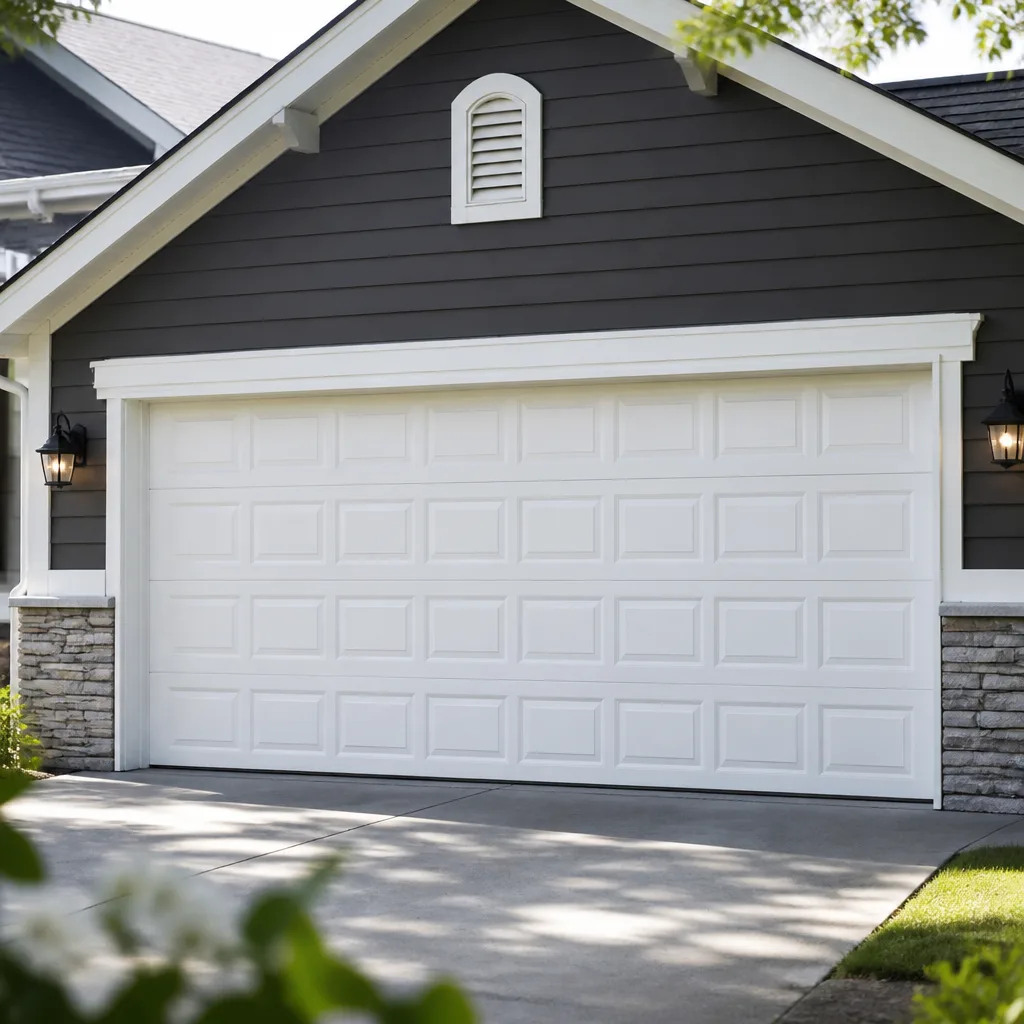 Raised-panel steel
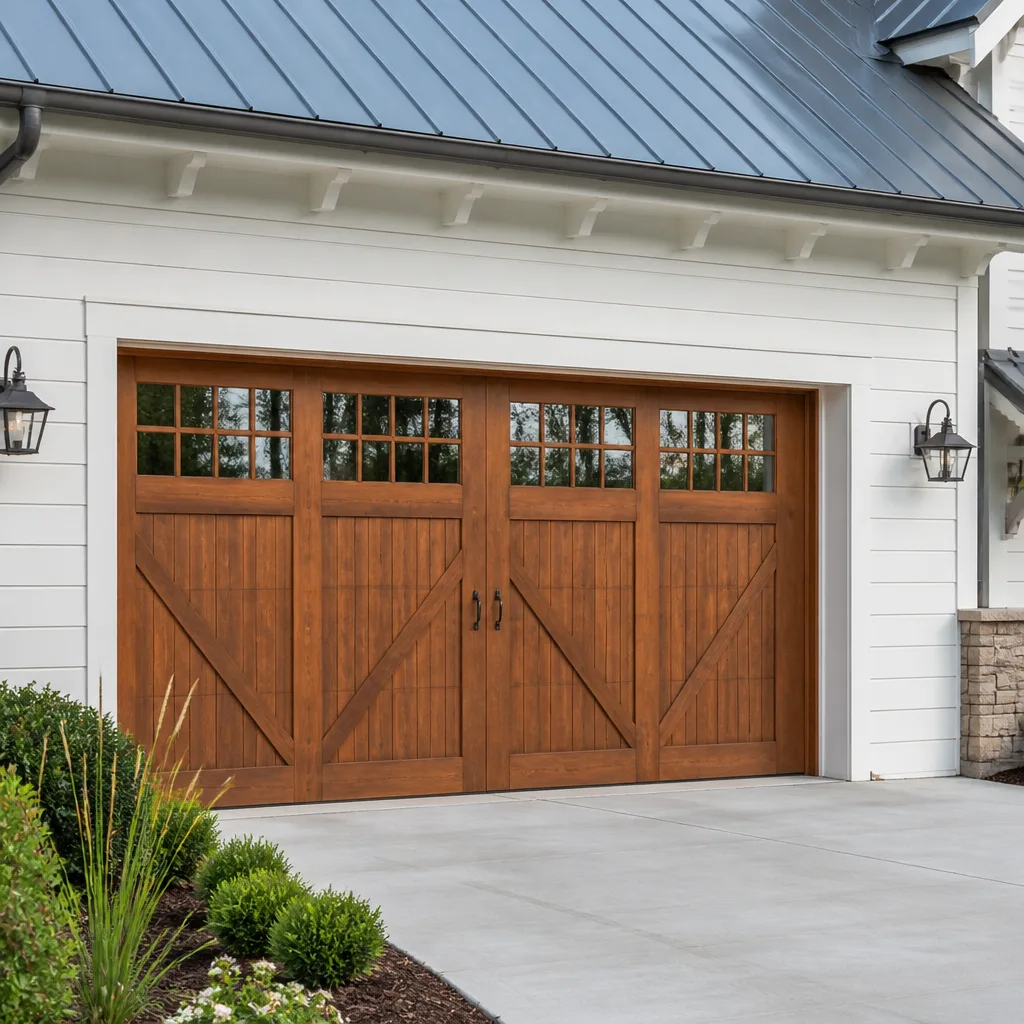 Carriage house
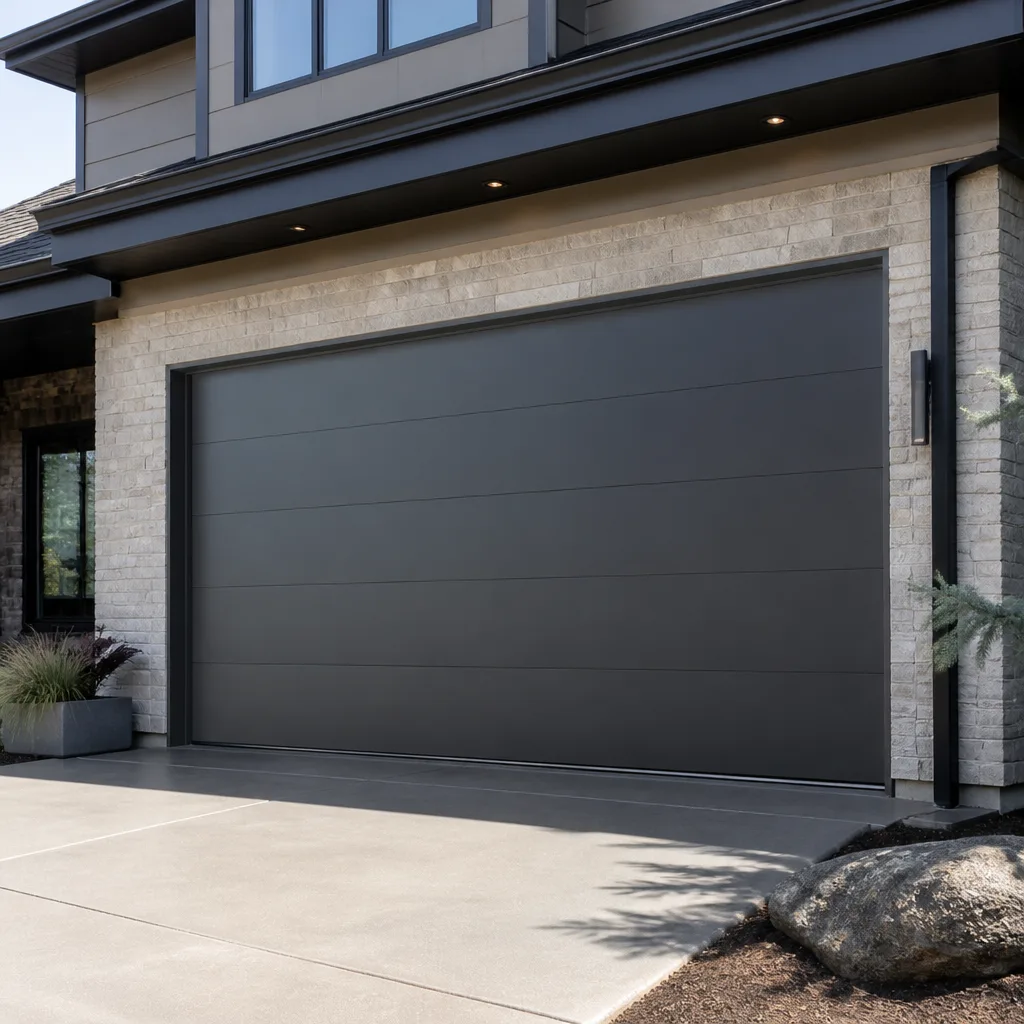 Modern flush
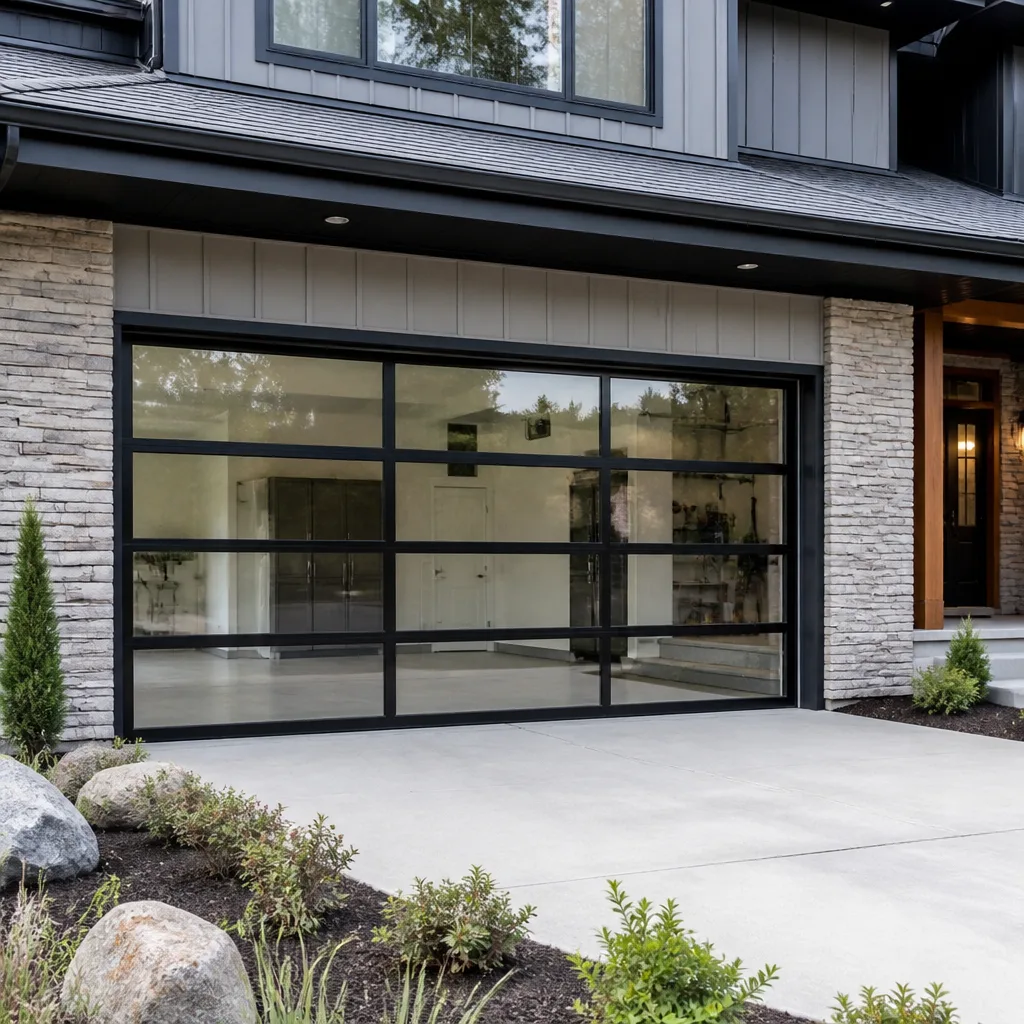 Full-view glass
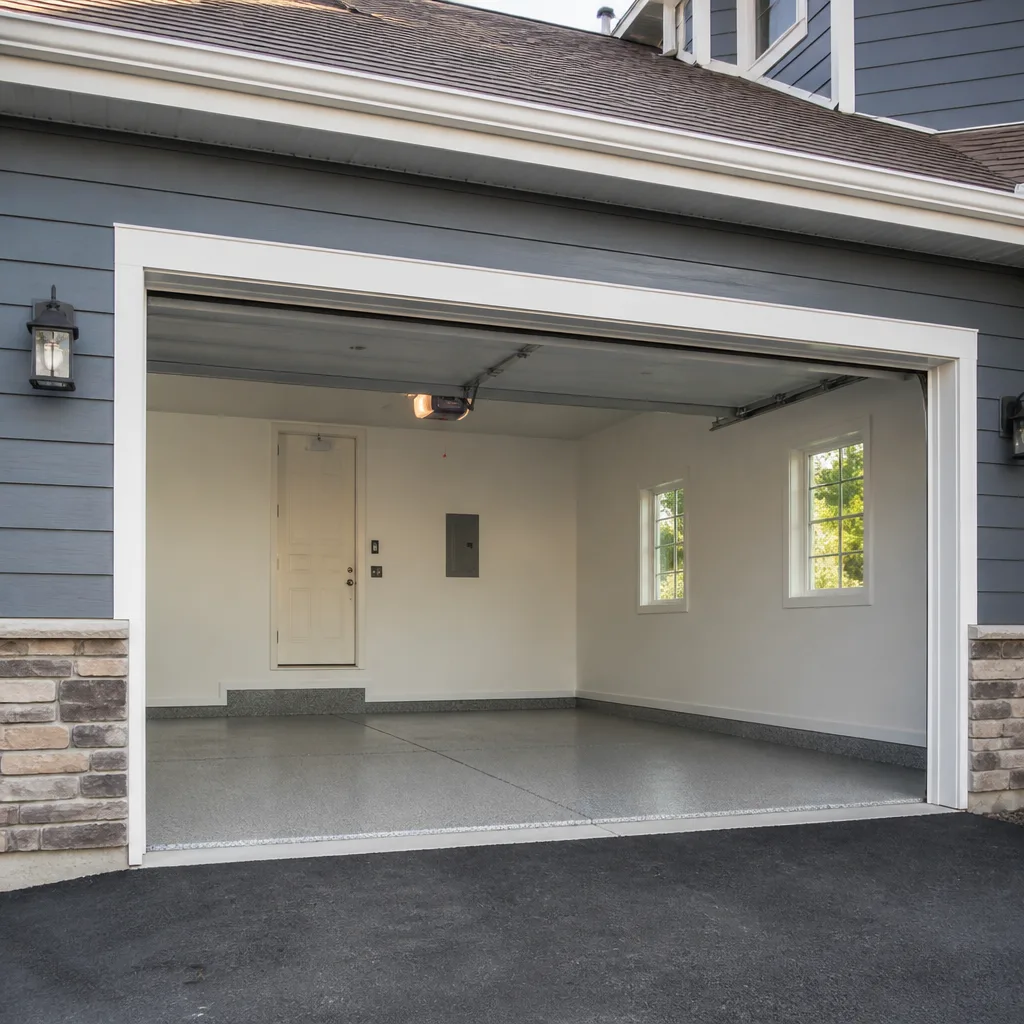 LiftMaster openers
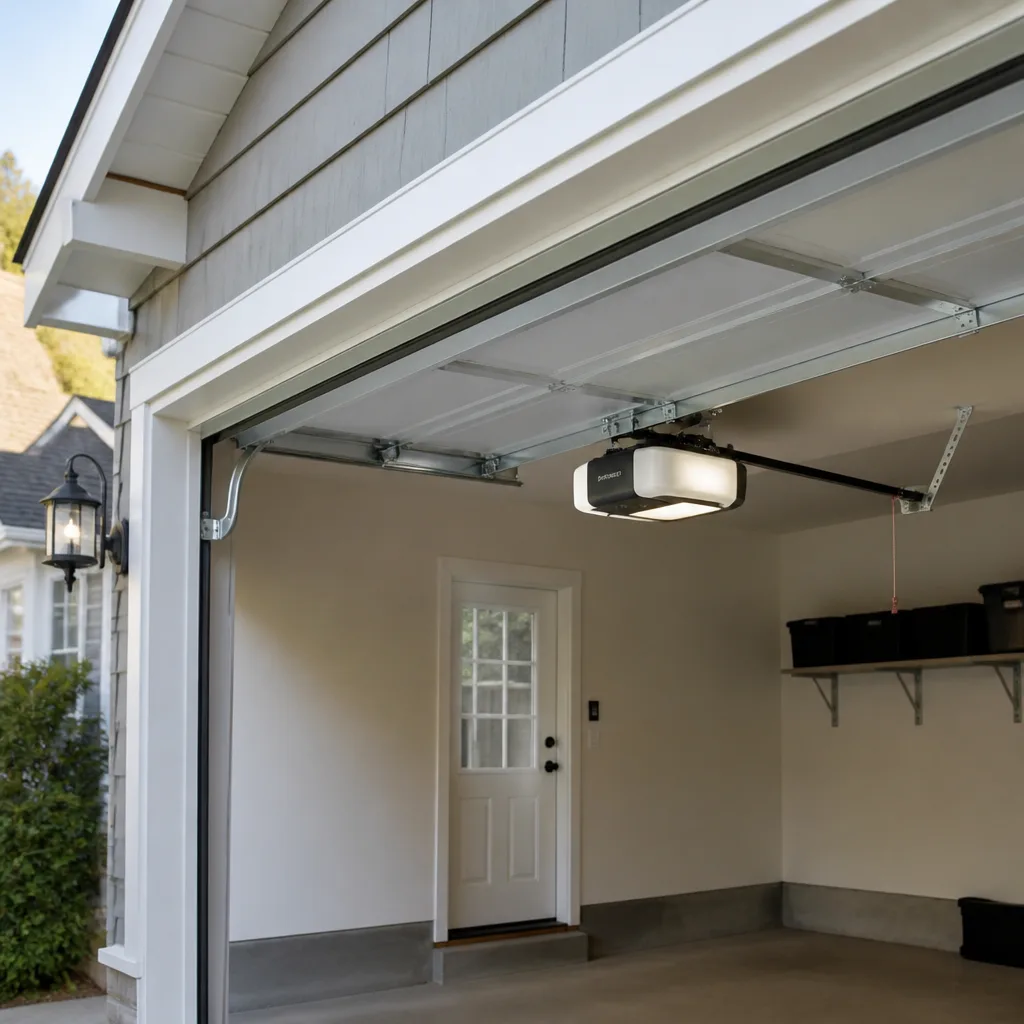 Chamberlain openers
Full 25-point door and opener safety check with every visit - springs, cables, rollers, tracks, and your LiftMaster or Chamberlain opener included
You get a price before we start. It does not change when the pro arrives.
Get your free estimateGarage Door Warning Signs: A Cambridge Homeowner’s Reference Guide
A garage door that opens unevenly, one side climbing faster than the other, is not an opener problem. It is a failing torsion spring on the lagging side, and running that door again will likely shear the cable drum within days. That single example shows why so many Cambridge homeowners get triage wrong: they read the symptom as one thing when the mechanism is telling them something else entirely. Some sounds mean “watch this.” Others mean “stop now.” This guide maps each warning sign to its real mechanical cause, sorts the urgent from the schedulable, and tells you what to say when you call.
Quick Answer
The physical warning signs that actually matter are uneven travel, a loud bang followed by a door that won’t lift, frayed or kinked cables, grinding or scraping sounds, and a door that fails to reverse when it meets an obstacle. Noise and vibration changes are the earliest signals most homeowners can catch, well before anything looks broken. Anything tied to springs, cables, or a door that won’t reverse is unsafe to keep operating and needs a trained technician now.
Styles & brands we work with
- Raised-panel steel
- Carriage house
- Modern flush
- Full-view glass
- LiftMaster openers
- Chamberlain openers
Table of Contents
- Symptom-to-Cause Map: What Each Behavior Actually Means
- Urgent vs. Schedulable: How to Triage Honestly
- Why Noise and Vibration Beat Visual Inspection
- Opener or Door? The Manual Disconnect Test
- How Cambridge Conditions Age a Garage Door
- What to Tell a Technician When You Call
- What Not to Touch Yourself
Symptom-to-Cause Map: What Each Behavior Actually Means
Every garage door symptom points to a specific part of the system. The trick is knowing which part. The table below pairs the behavior you notice with its likely mechanical source, so you can describe the problem accurately rather than guessing at it. This is the same mapping our technicians run through mentally the moment a customer describes their door.
- Opens unevenly, one side faster – A weakened or broken spring on the lagging side, or a stretched lift cable. Not an opener fault.
- Loud bang, door won’t open – A broken torsion spring. The bang is the spring releasing its stored tension.
- Door reverses before it reaches the floor – A misaligned safety sensor, an obstruction in its path, or a limit setting that drifted out of position.
- Grinding or scraping – Worn rollers, dry or seized hinges, or a track that has loosened or bent.
- Slow open, sluggish response – Often the opener’s capacitor, force setting, or a door that has become heavier than the opener was set for.
- Door won’t reverse when it hits an object – A failing safety reverse system. This is a safety failure, not a nuisance.
- Door drifts down after opening – Cable imbalance or a spring that has lost tension.
- Squealing on the way down – Dry rollers or aging bearings in the opener’s drive.
- Door stops halfway – A travel limit out of adjustment, or the opener sensing excessive resistance.
- Door rises a few inches and stops – The opener is binding, or a lift cable has come loose from a drum.
Keeping this map in mind helps you avoid the most common mistake: calling the opener the culprit when the door’s balance is the real problem. A door that has lost spring tension will defeat a perfectly healthy opener. If you’re unsure which side of that line your door sits on, our garage door repair team can diagnose it in person.
Urgent vs. Schedulable: How to Triage Honestly
The question every homeowner asks first is simple: do I call today or next week? The honest answer splits into two short lists. Urgent issues involve stored mechanical energy or a genuine safety function. Schedulable issues affect smoothness, noise, or minor comfort and can wait for a convenient appointment.
Call now (urgent):
- A broken spring. The door may be stuck partway up, and any attempt to operate it loads the remaining hardware.
- A frayed, kinked, or slack cable. Cables are under tension and can whip if they fail.
- A door that won’t reverse on contact. This is your door’s primary safety function, and a child or pet in the path is at real risk.
- A door hanging crooked or visibly unseated from a track.
- A door that has come completely off one of its tracks.
Schedulable (can wait for a normal appointment):
- Worn rollers that squeak but hold the door steady.
- A small gap in the weatherstrip that lets a little draft through.
- An opener that is a bit slow but travels fully and reverses correctly.
- Minor cosmetic wear on the panel surface.
- A remote or keypad that occasionally needs a second press.
The trap is treating a schedulable issue as urgent, or an urgent issue as normal wear. A worn roller is noise. A frayed cable is a hazard. Learning to tell them apart saves you from both panic calls and dangerous delays. If a door in Cambridge is left hanging on a compromised spring, the load shifts onto the cable drum, and that’s when a simple fix turns into a bigger repair.
Why Noise and Vibration Beat Visual Inspection
Most homeowners judge their garage door by looking at it. That’s the least reliable method available. A door can look perfectly fine and be two cycles from a failure, because the parts that matter most, the springs and cables, are usually hidden behind the door frame or wrapped inside a torsion tube. What you can’t see, you can hear.
Sound and vibration are early indicators because they change gradually as a component wears. A roller that has begun to flatten, a hinge that has lost its lubrication, a bearing that has picked up grit: each of these starts as a faint change in pitch or a slight shudder you feel through the floor. Catching them at that stage means a quick, inexpensive fix. Catching them after they’ve seized means a bent track or a strained opener.
Here’s how to use noise the way a technician does:
- Stand in the garage while the door runs and listen for changes compared to last month. New rattles, hums, or clicks are your early signal.
- Watch the door’s top edge for shudder as it travels. Any visible shake usually means a roller, hinge, or track issue is developing.
- Note where the noise comes from: the opener motor, the overhead track, or the door panels themselves. Each points at a different part.
- Check for a new vibration felt through the wall or floor. That often means a loosened track bolt or a worn torsion bearing.
Our technicians routinely find worn rollers and dry hinges this way, minutes before they’d have failed. Familiarity with the common residential brands, from LiftMaster openers to Clopay and Amarr doors, means we already know which components tend to wear first on a given system and don’t have to guess at the source of a new sound.
Opener or Door? The Manual Disconnect Test
Half the diagnostic work on a garage door is deciding whether the problem lives in the opener or in the door itself. Most guides skip this step, but you can do it yourself in a couple of minutes, and it’s the single most useful piece of information you can hand a technician.
Every opener has a manual release, usually a red cord or handle hanging from the carriage. Pulling it disconnects the door from the opener so you can move the door by hand. Here’s how to run the test:
- Close the door fully, then pull the manual release cord to disengage the opener.
- Lift the door by hand about halfway. A balanced door should rise easily and stay put when you let go with light pressure.
- If the door feels very heavy, drops, or won’t hold its position, the problem is in the door’s springs or balance, not the opener.
- If the door moves freely and stays balanced, the opener is the more likely source of the trouble.
- Re-engage the opener by running it until it clicks back into the carriage before you use it again.
What you learn from this test shapes the whole repair. A healthy opener paired with an unbalanced door will eventually fail from overwork, and replacing the opener won’t fix an unbalanced door. That’s why a specialist checks the door and the opener together. Our garage door opener repair work always starts here, because we’d rather diagnose the real cause than replace a part that was never the problem. Never attempt this test with a door whose spring is already broken, and never try to adjust springs or cables by hand; those carry stored energy that can cause serious injury.
How Cambridge Conditions Age a Garage Door
A garage door in Cambridge lives a harder life than its owner usually realizes. The region’s winters bring freeze and thaw cycles that work on the door’s metal, and the seasonal swing between humid summers and dry heated interiors expands and contracts wood and metal panels. Over a few seasons, that movement loosens fasteners, stiffens hinges, and lets small gaps open.
Cambridge’s housing stock adds its own wrinkles. In the older homes around neighborhoods like Mid-Cambridge and the streets near Harvard and Porter Square, garages are often attached to homes built decades ago, and the door frames and tracks were sized for the doors of that era. When a homeowner replaces the door, the opener and track hardware need to match the new door’s weight and dimensions, not the old one’s. Fitting a modern door to older track geometry is one of the more common jobs we see in Cambridge, and it’s a detail worth flagging when you book a measure.
Salt and road grime tracked in on tires and blown against the lower panels also take a toll, particularly on the bottom seal and the lower rollers. Those are the parts that see the most moisture and the most grit, and they’re usually the first to show wear. Checking the bottom weatherstrip and the lowest set of rollers each fall is a practical habit for any Cambridge homeowner who wants to head off a midwinter repair. It’s worth knowing that most door replacements and many structural repairs in Cambridge require a permit, so ask the city’s building department about your specific project before work begins.
What to Tell a Technician When You Call
A clear description on the phone saves time and, more importantly, prevents parts being replaced on a hunch. Technicians diagnose by elimination, and every specific observation you provide narrows the possibilities before anyone even arrives.
Have these five things ready when you call:
- The brand and model of the opener if you know it, and the door if you can find it. LiftMaster, Chamberlain, Genie, and Craftsman openers each have familiar failure patterns, and knowing the make shortens the diagnostic.
- What you hear, not just what you see. A grinding sound vs. a squeal vs. a bang points at different parts.
- Whether the door travels evenly or lags on one side. This single detail tells us whether we’re looking at springs, cables, or the opener.
- The result of the manual disconnect test if you’re able to do it safely: heavy door, balanced door, or a door that won’t move at all.
- How the door behaves at the close: does it reverse, hesitate, or stop short? That’s your safety-system status.
If you have a Raynor or a Chamberlain system with smart features, mention whether the app or remote is behaving erratically, since that points toward connectivity rather than mechanical failure. When you’re ready, call us and we’ll talk through what you’ve observed. We keep the same specialist team across repair, opener repair, and new installation, so the person diagnosing your door is the person who fixes it. That continuity is the whole reason Ashford Garage Door Repair stays focused on doors rather than splitting attention across trades.
What Not to Touch Yourself
Some garage door work is safe for a homeowner. Replacing a remote battery, tightening a loose bolt on the track, cleaning the photo-eye lenses with a soft cloth, or lubricating rollers and hinges with a proper garage door lubricant are all reasonable. Everything involving springs and cables is not.
Torsion springs store an enormous amount of energy. They’re under tension even when the door is down, and adjusting or replacing one without the right tools and training is genuinely dangerous. The same goes for the lift cables, which run under tension along the sides of the door and can whip violently if they slip a drum. If your diagnosis points to a spring or cable problem, the answer is to stop operating the door and call a trained professional.
Even simple-seeming fixes need care. Don’t run a door with a broken spring, because the opener will strain and the remaining hardware will take up the load. Don’t try to bend a track back into place by hand. Don’t bypass a safety reverse setting to make the door close. And don’t spray a lubricant designed for cars onto the springs or bearings; the wrong product attracts grit and makes wear worse. Our technicians have up to 15 years of experience with these systems, and they treat a spring or cable warning sign as a stop sign for a reason.
Common Mistakes to Avoid
- Assuming a slow door needs a new opener. Most sluggish doors are carrying too much weight or have a worn spring, and a new opener won’t fix either. Diagnose the door’s balance before blaming the motor.
- Ignoring an uneven rise. In Cambridge, a door that lags on one side is usually a spring problem, and running it will compound onto the cables within days.
- Silencing a squeal with the wrong lubricant. Using WD-40 or a general spray on rollers makes noise worse and collects grit. Use a garage door lubricant, and only on the parts meant to be oiled.
- Bypassing a safety reversal. If the door doesn’t reverse on contact, that’s a safety failure. Fixing it costs less than a mishap, and it should never be worked around.
- Skipping the fall once-over. Cambridge winters are hard on bottom seals and lower rollers, and the few minutes spent checking them in the fall save a cold-season repair.
- Replacing a single spring instead of the pair. Matched springs wear together; replacing one alone often means the other fails soon after, and a pair usually costs roughly twice a single spring. Ask about the pair.
- Calling a generalist for a door-specific problem. A handyman splitting attention across trades won’t stock the right rollers, hinges, or opener parts. A dedicated specialist arrives with the right parts and the diagnostic experience.
See the difference
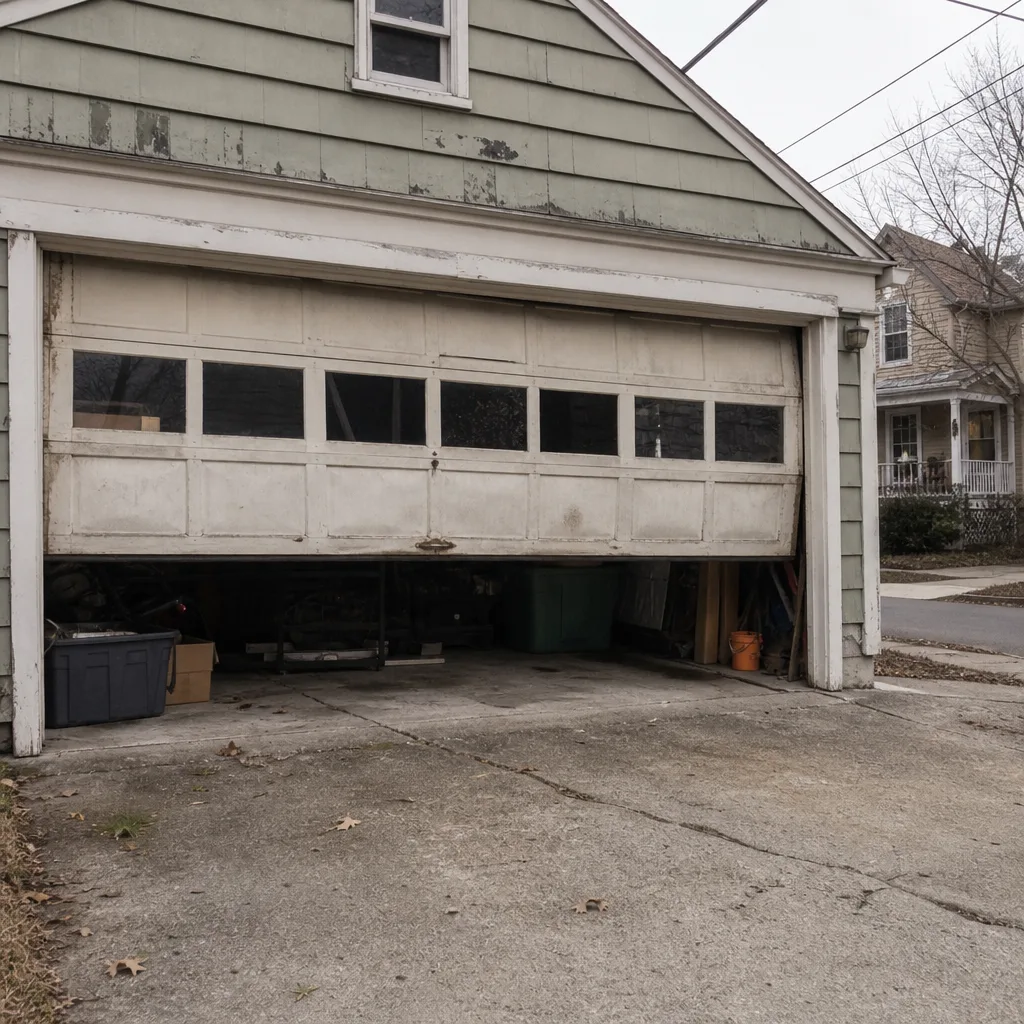 Before
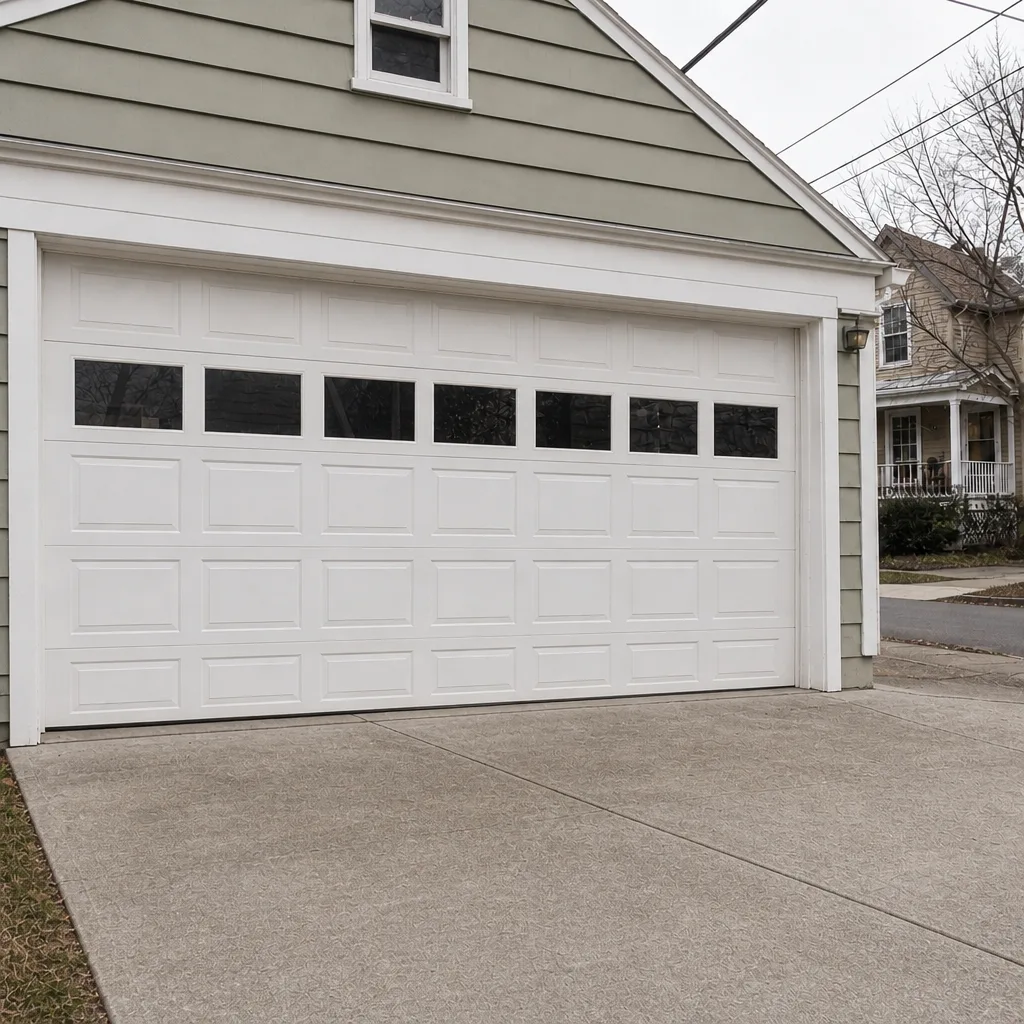 After
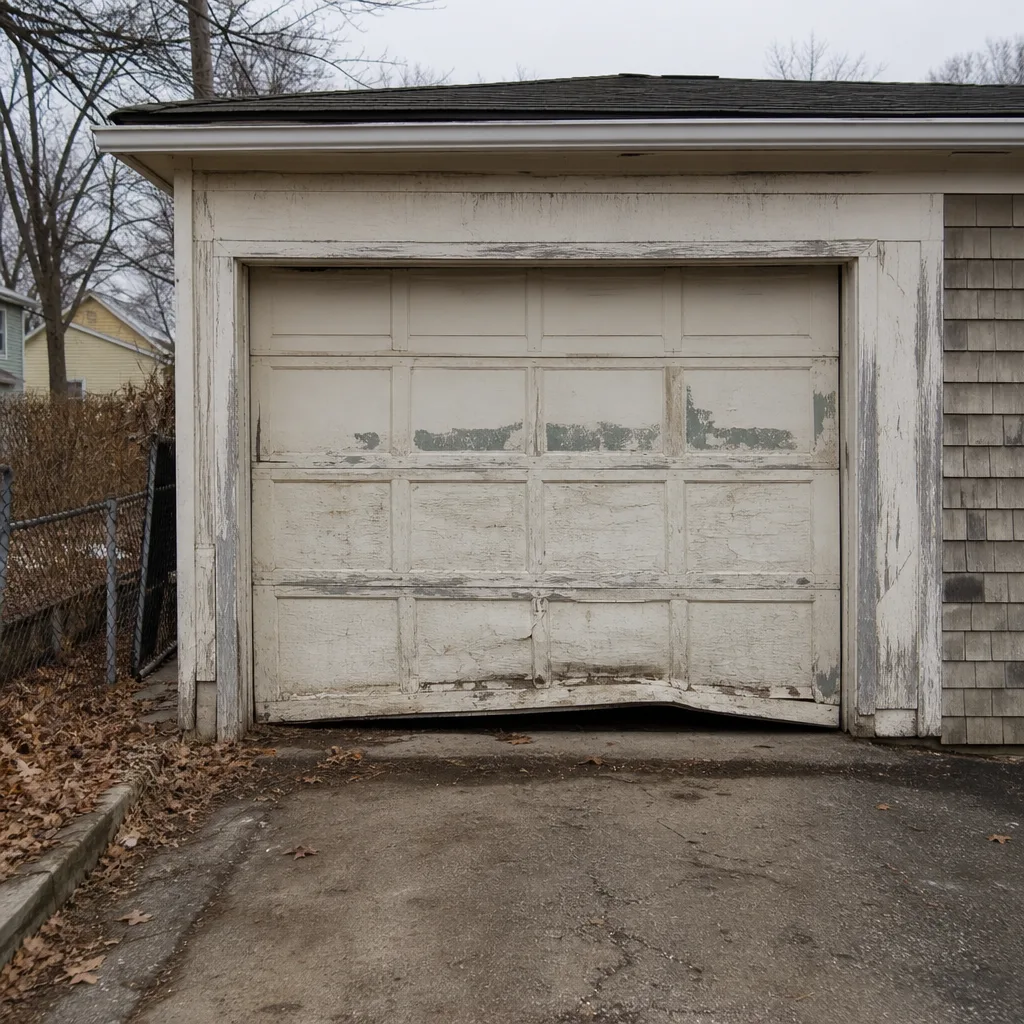 Before
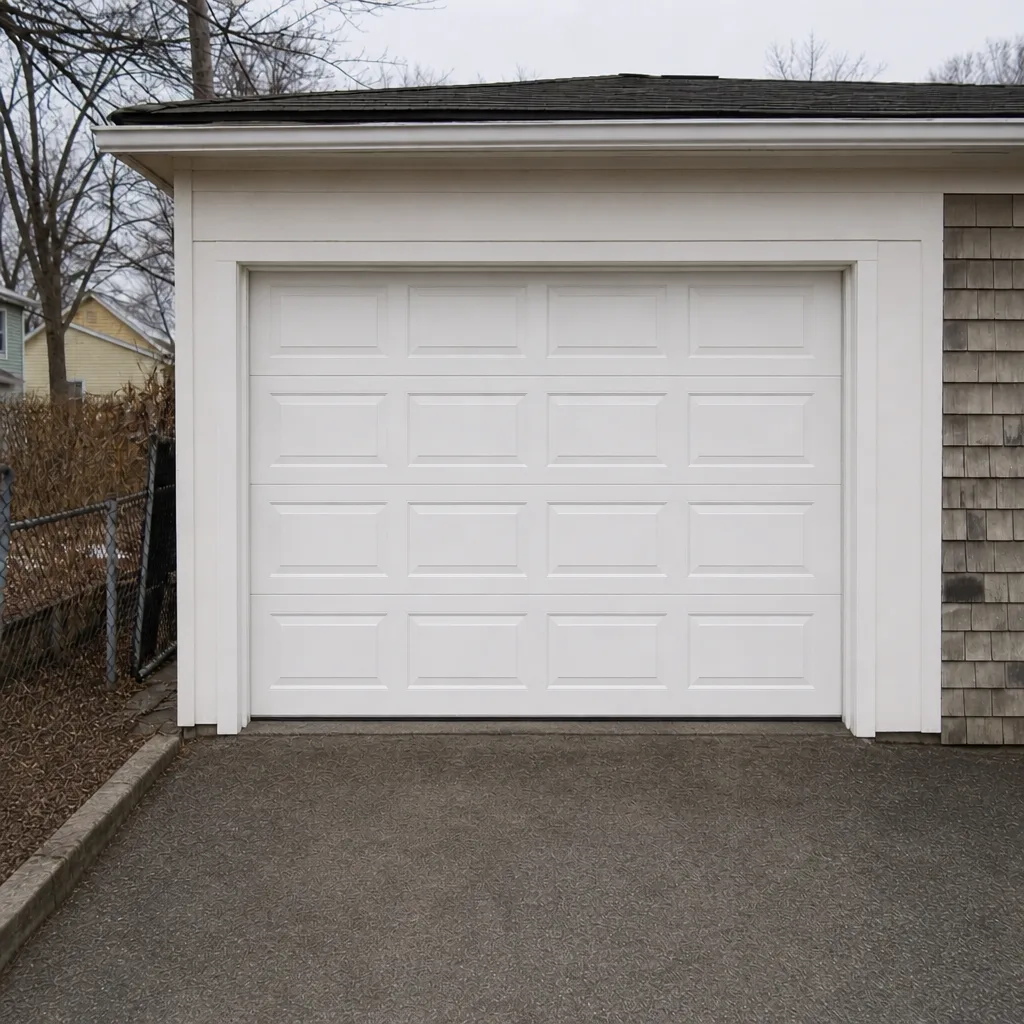 After
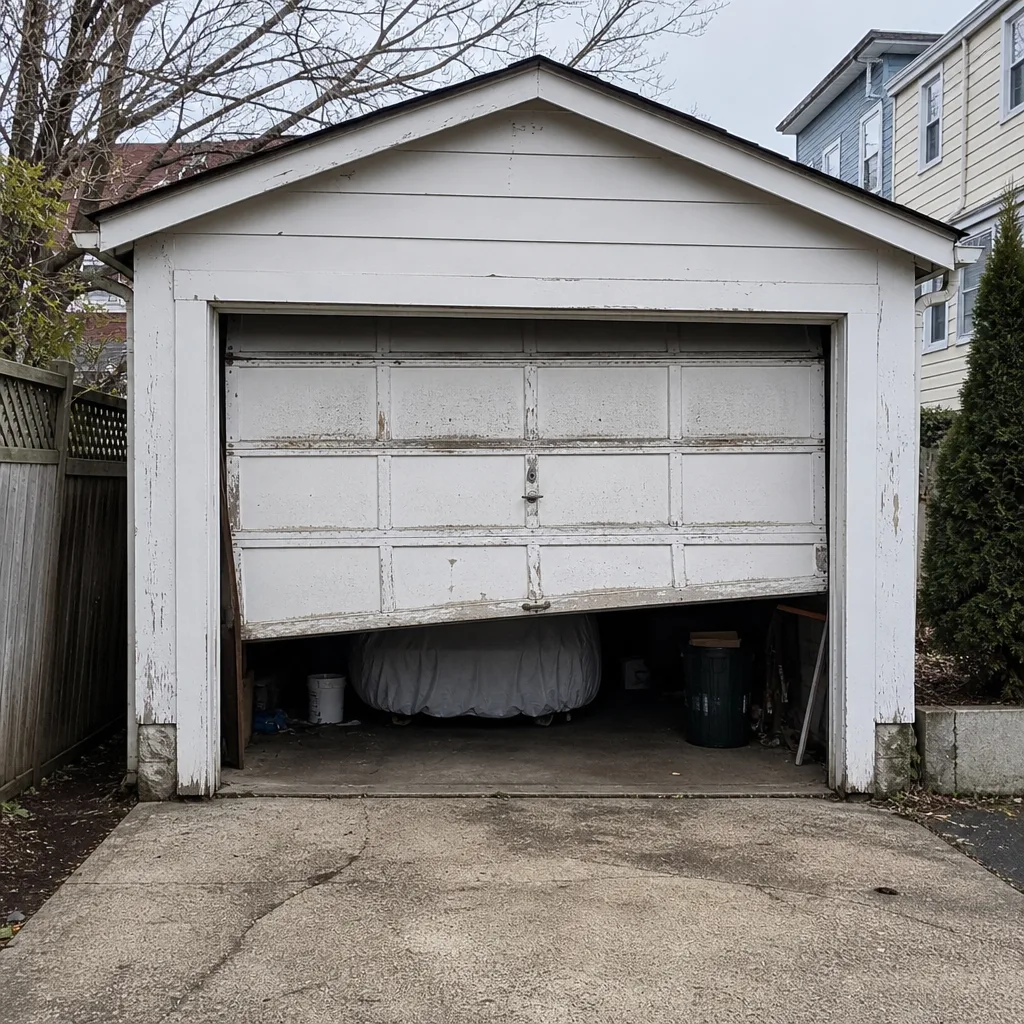 Before
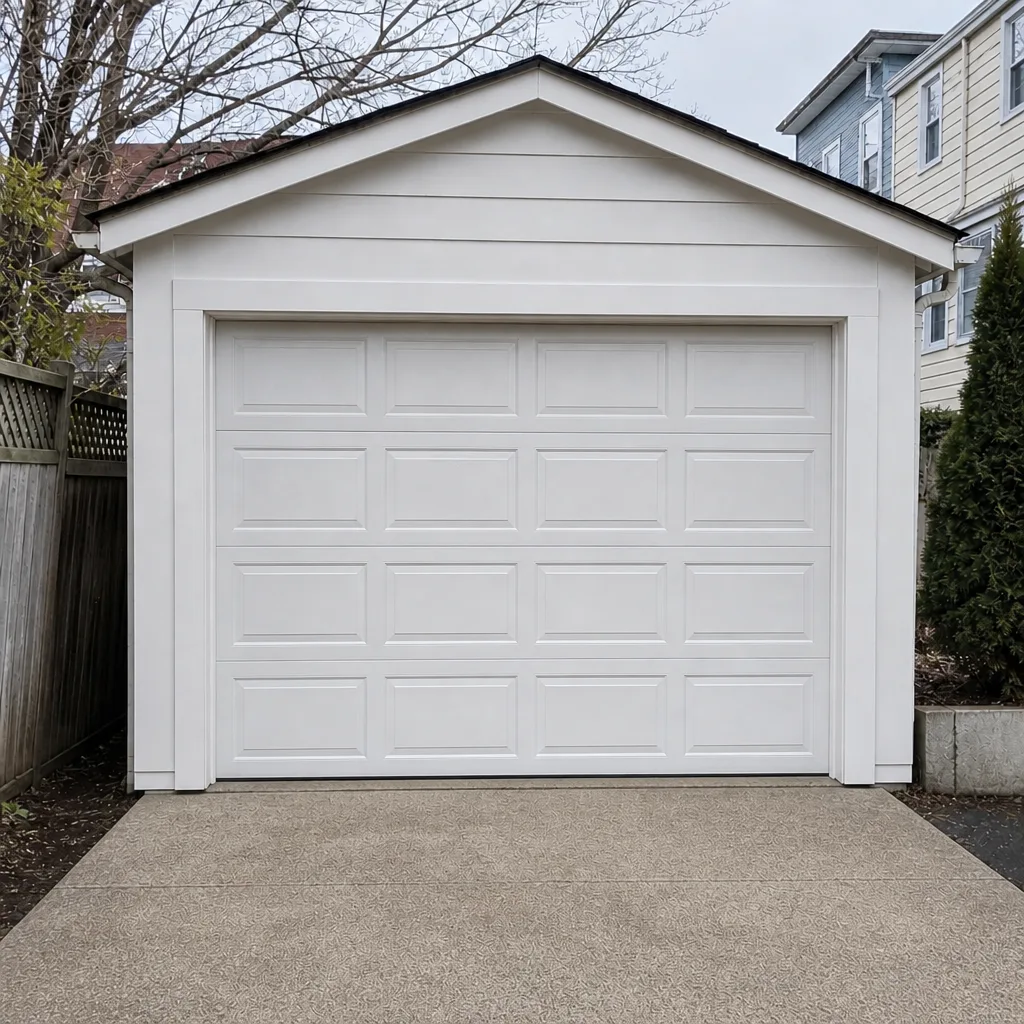 After
When to Call a Professional
Call a professional the moment your triage points to springs, cables, or the safety reverse system. Also call if the door has come off its track, if a visual inspection shows a bent panel or a track pulled away from the wall, or if the opener repeatedly reverses for no reason you can see. A door that rises a few inches and stops, or a door that hangs crooked, is telling you the balance is compromised. In those cases, stop operating it and book a free estimate. Our technicians can diagnose the root cause and recommend the right fix, not the most expensive one. Ashford Garage Door Repair offers free estimates in Cambridge. Call (866) 361-7938. We answer 24/7. Fast dispatch from 7am to 7pm, Sunday through Friday. Estimates are free, and the price is quoted and agreed before any work starts.
Frequently Asked Questions
An uneven rise, one side climbing faster than the other. It’s usually a failing spring on the lagging side, and it’s the sign most likely to escalate into a cable failure if the door keeps running. Call (866) 361-7938 for an exact quote if your door is rising unevenly.
Yes, if the noise is a squeak from worn rollers or dry hinges. No, if the noise is a grinding or scraping that gets worse, since that points to a track or roller problem that will spread. When in doubt, have it looked at. Call (866) 361-7938 and we’ll tell you what’s safe.
Use the manual disconnect test. Pull the release cord, then lift the door by hand: if it’s heavy or won’t hold its position, the door’s springs or balance are at fault. If it moves freely, the opener is the likelier culprit. Call (866) 361-7938 for a free estimate.
Yes, treat it as urgent. A broken torsion spring means the door is very heavy and unpredictable, and running it loads the cables and opener. Stop using it and book a repair. Call (866) 361-7938 for an exact quote.
It depends on the work, so it’s best to ask. Most structural changes and full door replacements need a permit from the city’s building department, while repairs often don’t. Check with Cambridge’s building department before your project begins. Call (866) 361-7938 for a free estimate.
Once a year is a good baseline, plus a quick fall check of the bottom seal and lower rollers before winter. Listen for new sounds each month and you’ll catch most wear early. Call (866) 361-7938 if anything sounds different.
No, the written estimate sets the price. We diagnose in person, quote the work, and you agree before anything starts. A quote on the phone is a range; the written estimate is what you pay. Call (866) 361-7938 for a free estimate.
We service LiftMaster, Chamberlain, Genie, Clopay, Amarr, Wayne Dalton, Craftsman, and Raynor. We work with whatever system is already in your garage rather than steering you toward a preferred brand. Call (866) 361-7938 for a free estimate in Cambridge.
The Bottom Line
Most garage door warning signs are readable once you know the difference between normal wear and a genuine failure. Uneven travel, a loud bang, frayed cables, and a door that won’t reverse are the urgent ones, and they all point at springs, cables, or the safety system. Worn rollers, a drafty weatherstrip, and a slightly slow opener can wait for a scheduled appointment. Listen for changes in noise and vibration, run the manual disconnect test when it’s safe, and describe what you hear and see when you call. Our technicians have up to 15 years of experience diagnosing doors in Cambridge, and we’ll tell you what actually needs fixing. Call (866) 361-7938 for a free estimate. We answer 24/7, fast dispatch runs 7am to 7pm Sunday through Friday, and the price is quoted and agreed before any work starts.
Written by the team at Ashford Garage Door Repair.